Digital Media Center

Office of Information Technology

Podcasting: An Emerging Technology with Potential

By Cristina Lopez

While faculty and staff members at the University of Minnesota have only begun to explore the educational potential of podcasting, over the past several months this new medium has generated tremendous interest all over campus. Why is this? Perhaps this is in part because the iPod and iTunes have already become integrated into students’ lives. It’s easy to imagine that sometime in the near future, when students check their iTunes first thing every morning they will find a mix of downloaded music, podcasts they listen to for entertainment, and a variety of educational podcasts generated by their instructors, departments, and the University. A student might find a recorded lecture from one class, feedback from an instructor about a paper, and for yet another class a preview of the day’s readings from fellow students. On other days he or she might find updates from his or her department or school, or an interview of a guest speaker who will make an appearance later that day in class. No time to listen to all the podcasts? No problem: the podcasts can be downloaded to any MP3 player and listened to on the bus, while standing in line, or while walking across campus (Campbell 2005).

Perhaps podcasting also has appeal because of its origins as an alternative to mass media such as radio. Podcasting was not developed by media professionals, but by ordinary people who were interested in creating programming more specifically tailored to their own interests and tastes and to those of their audiences, both real and potential. While the word “podcasting” is a portmanteau of “iPod” and “broadcasting,” no iPod is needed—one can listen to podcasts on any MP3 player or even a computer. While Apple created the iPod and offers software useful for podcasting such as iTunes and Garageband, the advent of podcasting pre-dates the podcasting capabilities now built into the Apple software. One significant development for podcasting was the creation of RSS, or “Really Simple Syndication,” a Web feed format that makes it easy to publish, distribute, and subscribe to podcasts.

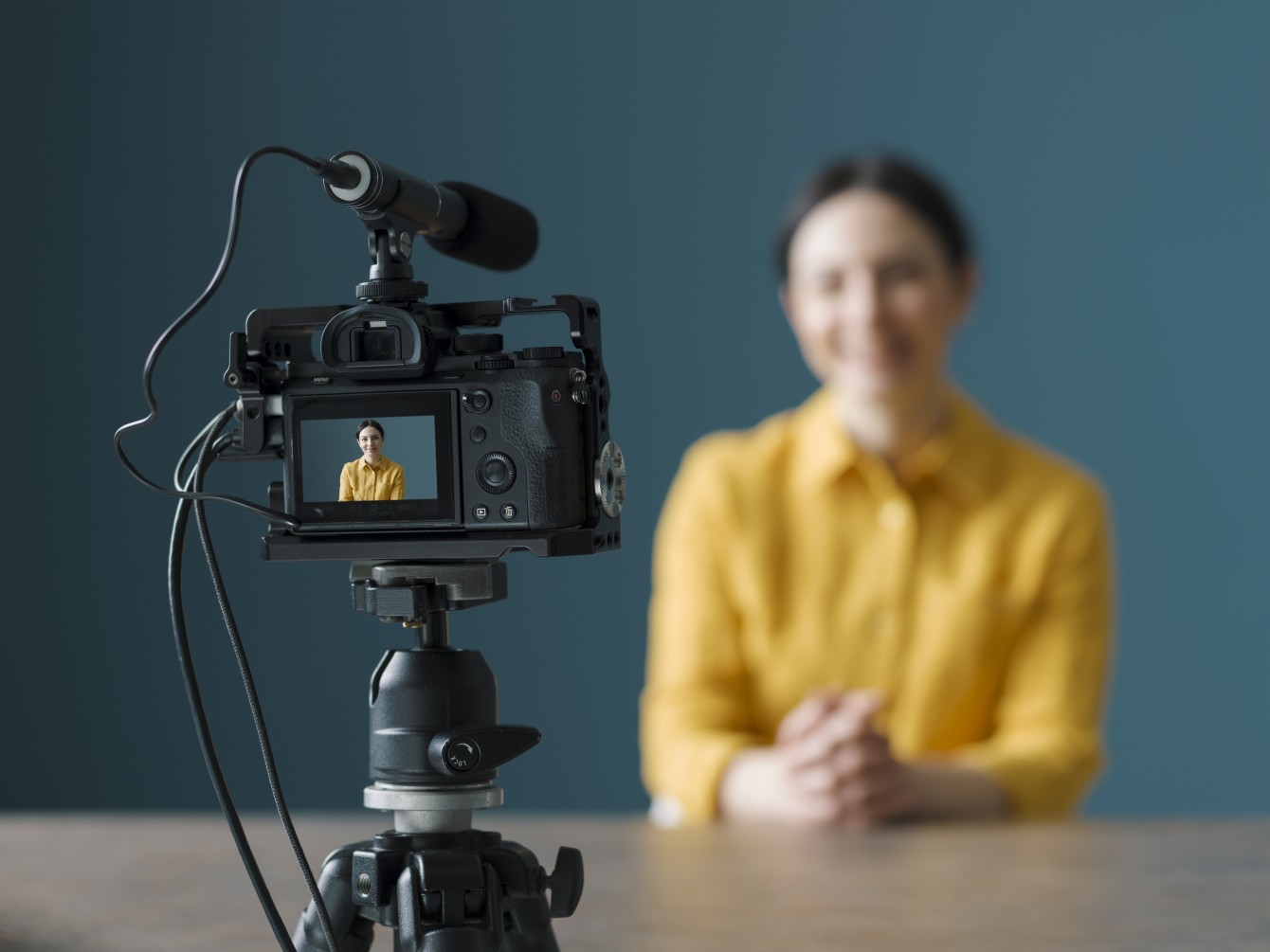
Now that podcasting has caught on, mainstream media outlets offer their own podcasts. That both mass media and individuals with a little tech savvy are now producing podcasts suggests a range of possibilities. Anyone with a microphone, a laptop, and some inexpensive software can produce a podcast of decent quality, while with more elaborate equipment and media production expertise one can produce a podcast of professional quality. Podcasting lends itself equally well to quick feedback from an instructor in response to reports submitted by students, or to the development of a series on newsworthy research at the University that can be distributed to alumni and archived.

One of the more common uses of podcasting is to record lectures and make them available to students enrolled in a course. This form of podcasting, sometimes referred to as “coursecasting,” is a logical extension of the age-old practice of student-made tape recordings of class lectures. Coursecasting offers the added convenience of portability—no more bulky recorders and audiotapes—and “push” technology that enables students to subscribe to a coursecast and automatically receive new recordings in “podcatchers” such as iTunes. While coursecasting is valuable for purposes of review, instructors should also consider the distinctive features of podcasting when they think about educational uses of this medium beyond providing recordings of lectures. Because podcasting is a mobile medium, instructors can create learning experiences for their students in spaces outside the boundaries of the classroom. A student’s experience of a museum tour or other field trip can be guided and shaped by an educational podcast. Short instruction modules can be useful for internships and other fieldwork. The possibilities of podcasting in education are tremendous so long as they are grounded in sound pedagogical principles and an understanding of the ways in which people are already making creative use of this new medium.

Bibliography

The following readings may help you use podcasting for teaching and learning.

Balas, Janet. “Blogging is So Last Year: Now Podcasting is Hot.” Computers in Libraries. 25, no. 10 (2005): 29–32.

This article provides a brief introduction to podcasting from a librarian who is enthusiastic about its possibilities yet also wary of jumping on yet another technology bandwagon. She concludes that libraries are already making good use of the medium, and provides a good list of resources for people who are interested in finding some examples to listen to for themselves.

Bull, Michael. "No Dead Air! The iPod and the Culture of Mobile Listening." Leisure Studies. 24, no.4 (2005): 343–355.

While this article does not discuss podcasting as such, Bull’s study of iPod users provides insight on how people have integrated the iPod into their everyday lives. As a mobile medium, the iPod helps users take more control over noisy, often chaotic urban environments and create individualized soundscapes. This article provides some food for thought for instructors interested in creating mobile learning experiences for their students.

Campbell, Gardner. "There's Something in the Air: Podcasting in Education." EDUCAUSE Review 40, no. 6 (November/December 2005): 32–47. http://www.educause.edu/er/erm05/erm0561.asp.

In this wonderfully descriptive article, Campbell speculates on the future of podcasting in higher education. The author argues that the power of podcasting lies not in the convenience of this mobile medium, but in the impact of the “explaining voice.” As Campbell puts it, “Consciousness is most persuasively and intimately communicated via voice.”

Cochrane, Todd. Podcasting: The Do-It-Yourself Guide. Indianapolis: Wiley, 2005.

This book was the first devoted to podcasting and provides an excellent overview of podcasting in plain language, from subscribing to creation to publishing. While the book provides a good introduction to options in software and equipment, budding podcasters might want to supplement the information by consulting more up-to-date information that is available online. The author also publishes a blog at http://www.geeknewscentral.com.

Duke University Information Science + Information Studies Program. “Duke University Podcasting Symposium.” Durham, N.C.: September 25–27, 2005. http://www.isis.duke.edu/events/podcasting/.

Duke University, which handed out iPods to every incoming freshman in 2004 as part of the Duke iPod First Year Experience, also sponsored the first academic symposium devoted to podcasting. The symposium focused on the ways in which podcasting is shaped by business, law, journalism, and Internet culture. Archived Webcasts are available on the Web site.

Wikipedia, s.v. “Podcasting.” http://en.wikipedia.org/wiki/Podcasting (accessed 20 April 2006).

The Wikipedia entry on podcasting provides an excellent overview of the origins of podcasting and how it works, and an extensive list of resources.

Last modified Tuesday, 19-Jun-2007 15:42:54 CDT